pic

into Our E-Book Library

Welcome to our educational e-book library! Here, you’ll discover a wealth of knowledge and resources designed to expand your understanding and ignite your curiosity. Explore our diverse collection today!

Mesquite Valley’s e-book library offers unparalleled convenience, allowing you to access a wealth of knowledge from anywhere, at any time. Enjoy affordable access to a vast collection of educational resources, eliminating the need for expensive textbooks and ensuring learning is within everyone’s reach. Our platform is designed for accessibility, making it easy for all users to navigate and find the information they need. Once purchased you will receive a digital copy in your email to download. Please feel free to reach out with any questions. 

Book Preface

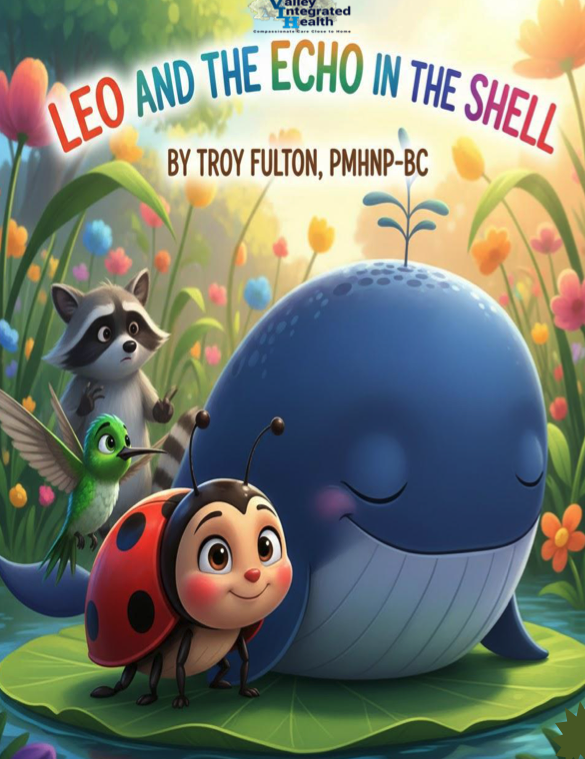
Welcome to Leo and the Echo in the Shell, a poignant and necessary story crafted to empower young readers to understand their emotional world and stand up to unkindness. In this book, we meet Leo the Ladybug, whose beautiful, sensitive shell symbolizes the delicate nature of a child's heart. Through his encounter with Rex the Raccoon, who uses sharp words and actions, we explore the deep emotional impact of bullying, anxiety, and the temptation to retreat and hide. This story uniquely uses vivid animal metaphors—such as the "Heavy Fog of Avoidance" and the "Echo in the Shell"—to provide children with a tangible vocabulary to describe complex feelings that often leave them feeling isolated. Our aim is to move beyond simply identifying bullying; we focus on building unbreakable inner resilience. Guided by the wisdom of Willow the Whale and the fierce loyalty of Zippy the Hummingbird, Leo learns practical, mental health tools like the "Deep Sound" breathing technique and the power of the "Invisible Shield" (boundaries). These strategies are not just fictional tools; they are actionable lessons designed to help children stop internalizing negativity, reclaim their sense of control, and understand that leaving a harmful situation is an act of self-respect, not weakness. Parents, educators, and mental health professionals will find this book an invaluable resource for initiating conversations about emotional regulation and bystander power.

Leo and the Echo in the Shell
A story-based book that explores inner thoughts, confidence, and emotional awareness for children.
Book Preface

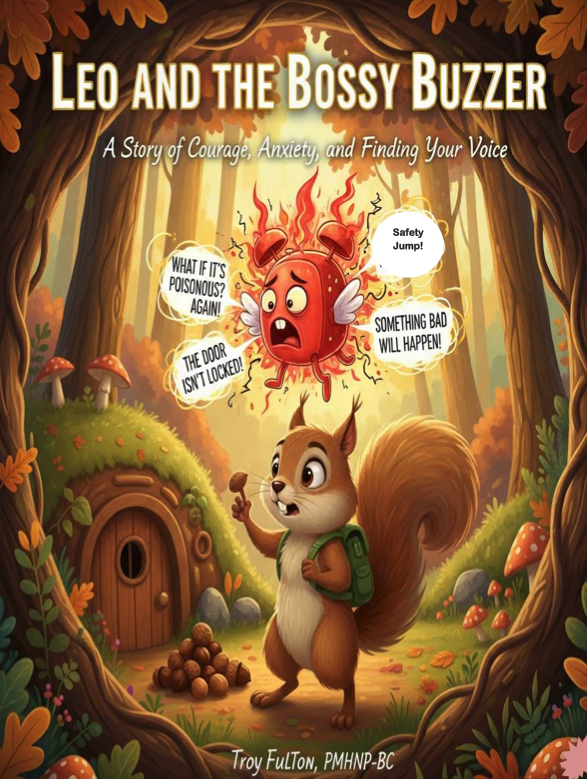
Welcome to the world of Leo the Squirrel, a cheerful, busy friend who loves gathering nuts and playing games. But lately, something new has moved into Leo’s mind: The Bossy Buzzer. This noisy, anxious alarm shouts endless "What if?" questions, telling Leo that if he doesn't do a specific, complicated "Safety Jump" ritual, something terrible will happen. The Buzzer demands control, and the only way Leo can quiet it down is by tapping, checking, or washing— until the Buzzer demands he do it all over again, only louder. This book is about learning that Leo isn't broken or bad; he's just stuck in a frustrating, high-energy cycle known as Obsessive- Compulsive Disorder, or OCD. In the pages ahead, Leo will meet Professor Cedar, a wise and steady tortoise who teaches Leo the truth about the Bossy Buzzer. Professor Cedar helps Leo understand that the Buzzer isn't trying to keep him safe; it's simply trying to be obeyed. Leo will learn that every time he gives in to the ritual, he is handing the Buzzer more power. But by listening to Professor Cedar, Leo discovers his own courage and finds the hardest, most powerful tool of all: The Brave Pause. This simple technique gives Leo a chance to step back, choose to "Sit with the Squirm," and decide for himself what he will do next. This story is a guide for any child who has a noisy, persistent worry that makes them feel stuck. If you have a Bossy Buzzer in your head, reading Leo’s journey will help you understand that your thoughts are just air, and you don't have to follow every command they give.

Leo and the Bossy Buzzer
A children’s story that helps young readers understand anxious thoughts and practice calming strategies.
Book Preface

WHAT IS INTERPERSONAL CONFLICT? Interpersonal conflict happens when two or more people have opposing needs, goals, or viewpoints. It is a normal part of relationships, but if left unmanaged, it can lead to misunderstandings, resentment, and damaged trust. WHY MANAGING CONFLICT MATTERS Strong conflict-management skills help you stay calm, communicate your needs, and understand the other person more clearly. This allows you to work toward fair solutions instead of repeating the same arguments or avoiding the problem altogether. WHY DBT AND CBT? This workbook combines two proven approaches: DBT (Dialectical Behavior Therapy): builds mindfulness, emotion regulation, distress tolerance, and interpersonal effectiveness. CBT (Cognitive Behavioral Therapy): helps identify and change unhelpful thoughts and behaviors. Together, they give you both practical tools and new ways of thinking to manage conflict more calmly and effectively. HOW TO USE THIS WORKBOOK Each section includes short guides, reflections, and worksheets. The goal isn ’t perfection, it’ s practice. Work through the pages at your own pace. The more you practice the skills, the easier they will feel in real-life situations.

Handling Interpersonal Conflict for Adults
An adult workbook designed to strengthen communication skills and manage conflict more effectively.
Book Preface

WHY THIS WORKBOOK? This is your toolkit for handling conflict in healthier ways. Uses CBT (change unhelpful thoughts) + DBT (manage emotions, build relationships). WHAT YOU’LL LEARN 1.Understand why conflict happens. 2.Spot your triggers and habits. 3.Calm down before reacting. 4.Communicate clearly and respectfully. 5.Find win-win solutions. HOW TO USE IT Read guide pages for skills. Complete worksheets honestly. Practice in real life. Reflect after each section. TIPS Be honest, no judgment here. Take breaks if you feel stressed. Progress comes with practice.

Handling Interpersonal Conflict for Adolescents
A structured workbook for teens to improve communication, problem-solving, and conflict resolution skills.
Book Preface

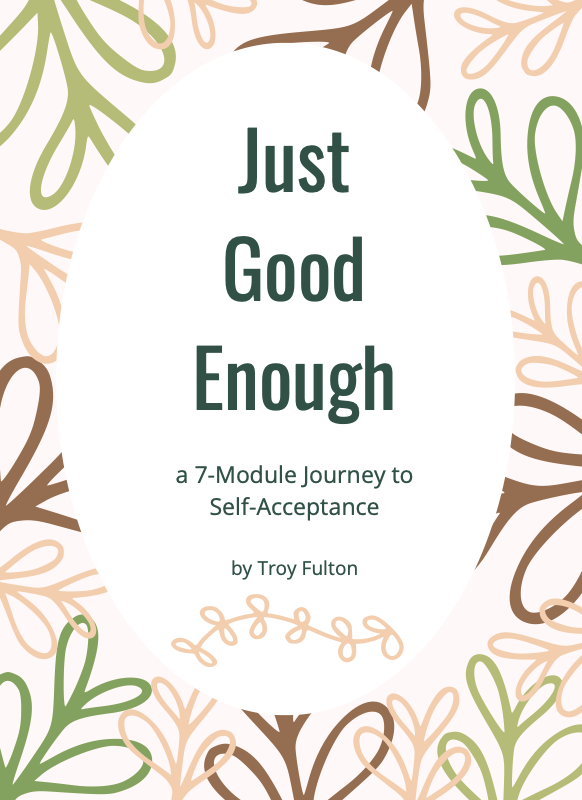
Perfectionism is more than wanting to do well, it is a pattern of setting unrealistically high standards, becoming overly self-critical, and tying one’s worth to flawless performance. Modern psychology describes perfectionism as a multidimensional trait rather than a simple personality quirk. It shows up in how people think, behave, and evaluate themselves. While many individuals believe perfectionism is purely about being organized or ambitious, research makes it clear that it’s far more complex, involving emotional, cognitive, and behavioral habits that shape a person’s daily life.

Just Good Enough
A self-acceptance workbook that helps readers let go of perfectionism and build a healthier self-view.

Book Preface

This installment of The Mental Wellness Series, Emi's Echo: Reclaiming the Present from the Shadow of Trauma, follows the journey of Emi Hoshino, a sensitive and creative high school student whose life is abruptly disrupted when a sudden, jarring trigger sends her into a spiral of overwhelming emotions and intrusive memories. Set against the backdrop of their structured academy, Emi’s core group of friends— the supportive Kenji, the analytical Ren, and the nurturing Sakura—step up to help her navigate the turbulent waters of trauma recovery. The story chronicles Emi's struggle with symptoms like dissociation and emotional numbing, and her eventual path toward reclaiming her life through practical coping skills like grounding techniques and Narrative Therapy. This is a powerful, visual story about the crucial need for safety, the process of restoring trust, and finding strength in vulnerability and community. The primary purpose of this ebook is to demystify psychological trauma for young readers.

Emi’s Echo
A reflective story about healing, identity, and rebuilding after difficult experiences.
Book Preface

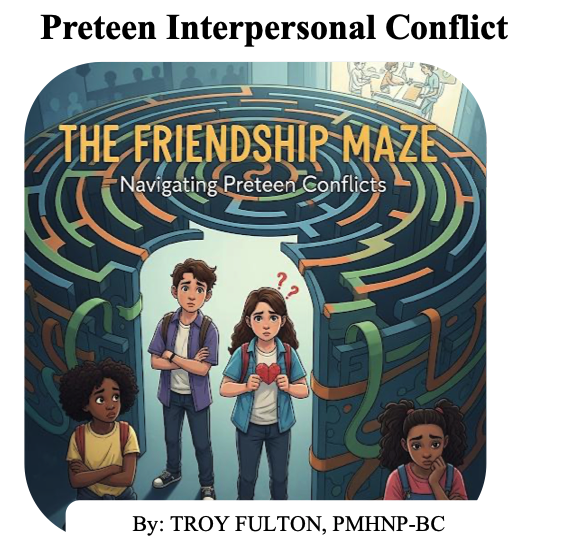
The ebook is designed to be used as a comprehensive, conflict management resource. For preteens, it offers accessible language and relatable scenarios to empower them with practical skills. For parents, it provides insight into their child's experiences and tools to support them. For mental health professionals, it serves as a structured framework for therapeutic interventions, workbooks, and journaling exercises. At its core, this book aims to equip preteens with the ability to manage their emotions effectively, communicate their needs and feelings assertively, and understand the perspectives of others. These skills are foundational for resolving conflicts peacefully and fostering positive relationships. Beyond theoretical understanding, the book emphasizes hands-on learning. Integrated throughout are interactive workbooks, reflective journaling prompts, and targeted worksheets designed to help preteens practice and internalize the strategies discussed. This active engagement promotes deeper learning and development to the preteens.

The Friendship Maze
A preteen-focused guide to navigating friendships, conflict, and social problem-solving.
Book Preface

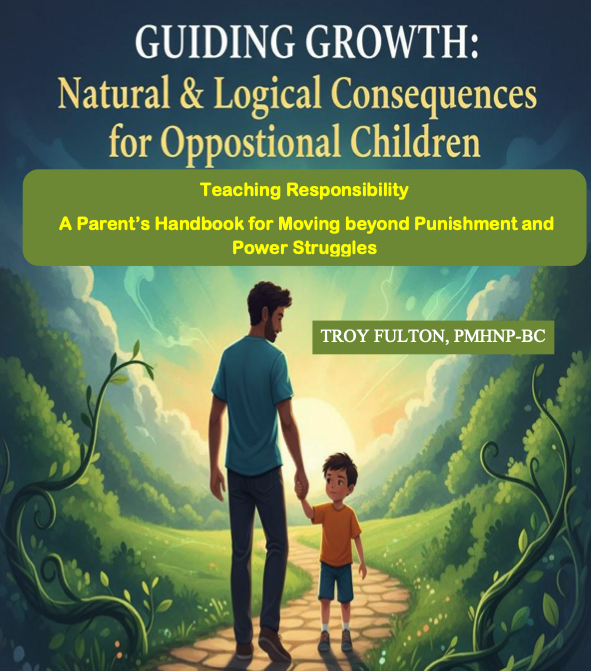
Parenting a child who exhibits oppositional behavior can often feel like navigating a relentless storm. The daily cycle of defiance, arguments, and emotional outbursts can leave even the most loving and patient parents feeling exhausted, frustrated, and at a loss for effective strategies. You may find yourself caught in power struggles, resorting to punishments that feel ineffective in the long run, and watching as your once-joyful connection with your child erodes under the weight of constant correction. If this resonates with your experience, know that you are not alone, and more importantly, understand that a powerful and transformative shift in your approach is not only possible but within your reach. This book, "Guiding Growth: Natural & Logical Consequences for Oppositional Children," is designed to be your compass, offering a respectful, evidence-based pathway to foster cooperation, responsibility, and genuine self-regulation in your child, moving beyond the reactive cycle of punishment towards proactive, empathetic guidance. Within these pages, we embark on a journey to redefine discipline, equipping you with the understanding and practical tools to respond to challenging behaviors with calm confidence rather than escalating frustration.

Guiding Growth
A parenting and behavior support resource focused on teaching responsibility through effective consequences.
Book Preface

This workbook is designed to help adults understand and manage social anxiety using evidence-based approaches: Cognitive Behavioral Therapy (CBT), Dialectical Behavior Therapy (DBT), and Solution-Focused Brief Therapy (SFBT). WORKBOOK PURPOSE: Help you recognize and understand your social anxiety. Teach practical skills to manage thoughts, emotions, and behaviors. Provide interactive exercises to practice strategies and track progress. WHAT IS SOCIAL ANXIETY? Social anxiety is more than feeling shy or nervous. It’ s an intense fear of being judged, embarrassed, or negatively evaluated in social situations. This can affect work, relationships, and daily life. OVERVIEW OF APPROACHES: CBT: Focuses on how thoughts, feelings, and behaviors interact. Helps identify and challenge unhelpful thinking patterns. DBT: Focuses on managing intense emotions, increasing mindfulness, and coping with distress. SFBT: Focuses on solutions, strengths, and building practical strategies to improve your life.

Managing Social Anxiety Workbook for Adults
A practical workbook for adults who want to reduce social anxiety and build more confidence in relationships.

Preface

Welcome to the Crew, Have you ever felt like a gray blanket has been thrown over everything you love? Or watched a friend struggle and desperately wanted to help, but didn't know how? You are holding the right book. This is Emi's Deep Dive: Navigating the Tides of Depression—a powerful story that follows Emi Hoshino, a sensitive artist, as she confronts a period where her world is overtaken by the silence and heavy exhaustion of depression. This book is a unique blend of compelling narrative and crucial mental health education, allowing you to connect deeply with characters who are experiencing these feelings firsthand. The core of this book provides two vital perspectives. If you are struggling with depression, you will find validation, understanding, and actionable coping skills like the "Light Switch Practice" and mindfulness techniques. If you are a friend, you will learn the essential art of appropriate interaction, understanding that friends are not therapists but vital support. We teach the difference between validating a feeling and trying to "fix it," and how to establish healthy boundaries using a "Support Team Contract." Ultimately, you should read this book to gain mental health literacy—the ability to recognize warning signs, understand the biology behind the symptoms, and communicate effectively about mental health. By witnessing Emi's journey and her friends' evolution, you will gain lifelong tools, realizing that emotional power, once harnessed and understood, becomes an immense strength. Emi needs her crew, and the crew needs to learn how to support her.

Emi’s Deep Dive
A story-driven book that explores emotional depth, personal growth, and inner resilience.
Preface

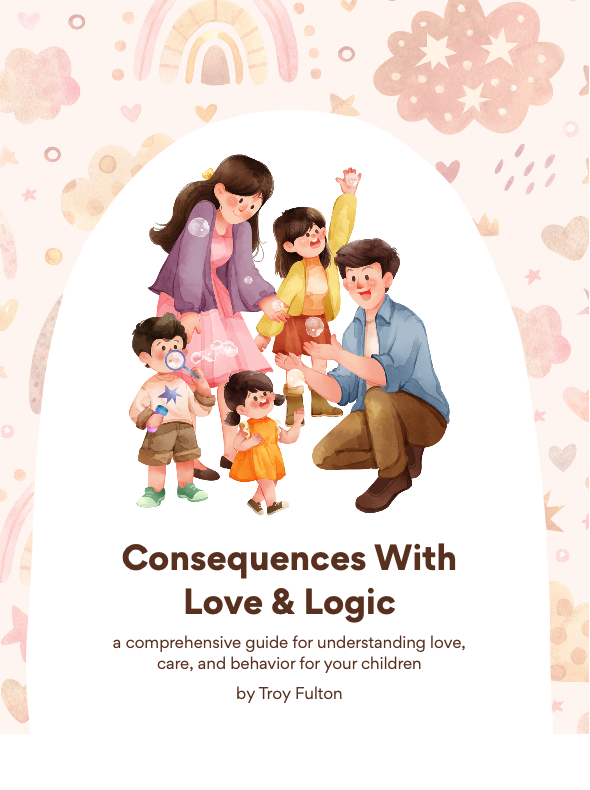
Parenting isn’t about perfection, it’s about progress, presence, and patience. This guide was created to help you bring calm, structure, and understanding into your parenting journey. You’ll learn how to use consequences with empathy, strengthen communication, and guide your child’s growth without losing connection or compassion. Every strategy, reflection, and example in this book comes from both clinical experience and real-life families who’ve learned to blend firmness with love, and logic with understanding. Take a deep breath, and remember: every day is a new chance to practice.

Consequences With Love & Logic
A relationship-based parenting guide focused on teaching accountability with empathy and consistency.
Preface

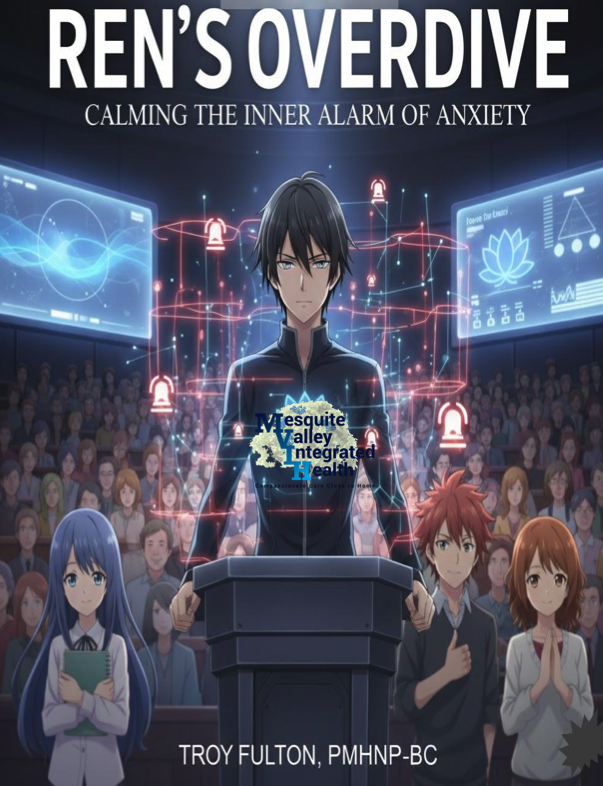
Welcome to Ren's Overdrive: Calming the Inner Alarm of Anxiety, the next installment in our journey exploring the complexities of mental health in adolescence. This book follows Ren Sato, the group's sharp-witted, analytical perfectionist, as his relentless pursuit of excellence triggers a chronic, nagging state of worry known as Generalized Anxiety. Driven by the pressure of a major robotics competition and school presentations, Ren finds his intellectual overdrive hijacked by an "inner alarm" that won't quiet down, manifesting as persistent physical tension, intrusive thoughts, and the urge to avoid stressful situations entirely. Through the support of his friends—Emi, Kenji, and Sakura—Ren begins to treat his mind like a complex system needing debugging. The story details his practical journey as he learns essential mental health "commands" like the Anchor Strategy for grounding, the Thought Filter for cognitive restructuring, and the necessary Maintenance Protocol of lifestyle adjustments to regain control over his nervous system. The primary purpose of Ren's Overdrive is to demystify anxiety and present actionable, science-backed coping strategies (like Diaphragmatic Breathing, the 5-4- 3-2-1 Grounding Method, and Cognitive Behavioral Therapy basics) within a relatable anime narrative. Adolescents need to read this book because anxiety is one of the most common mental health challenges today, yet it often goes unaddressed until it becomes debilitating. By framing anxiety not as a character flaw, but as a natural alarm system stuck on high alert, we empower teens to understand and manage their physical and cognitive symptoms. Ren’s story, especially given his logical and analytical approach, validates the experience of high-achieving, overthinking teens, offering them a clear roadmap for building resilience and acceptance, proving that learning to adjust the alarm is the ultimate win, allowing them to harness their focus without the fear.

Ren’s Overdrive
A calming guide centered on understanding anxiety and learning ways to slow down the inner alarm system.
Preface

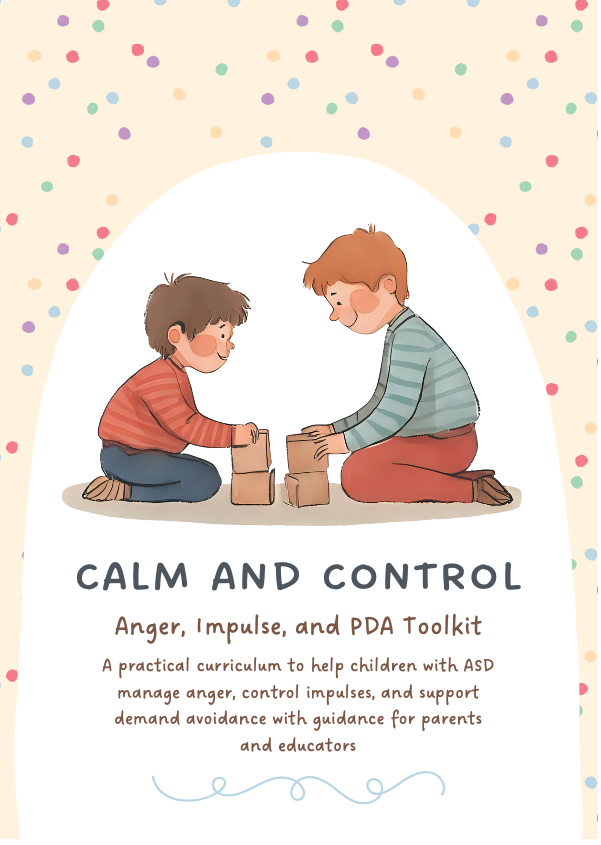
Children with Autism Spectrum Disorder (ASD) often experience challenges with emotional regulation, particularly in managing anger and impulse control. Research shows that emotional dysregulation in ASD is frequently linked to biological sensitivities and difficulties with cognitive flexibility, which can manifest as anger outbursts or aggressive behavior. A critical step in anger management is helping children understand their emotions by making abstract feelings more concrete through visual supports such as traffic light systems or anger thermometers. These tools enable children to identify escalating anger and engage in coping strategies before an outburst occurs. Cognitive Behavioral Therapy (CBT) techniques have been found effective for children on the spectrum by addressing maladaptive thoughts that fuel anger rumination, the repetitive focus on negative events. CBT interventions teach children how to recognize triggers, restructure negative thoughts, and practice calming techniques like deep breathing and mindfulness. Additionally, social stories tailored to individual triggers help children anticipate and react appropriately to frustrating situations, thereby reducing impulsivity and temper outbursts. Physical activities and play therapy serve as healthy outlets for excess energy and emotional release, improving self- regulation. Finally, understanding Pathological Demand Avoidance (PDA), a profile characterized by anxiety-driven avoidance of everyday demands, is important for children who exhibit extreme resistance or defiance linked to controlling anxiety. Teaching children with PDA alternative ways to express their need for control and incorporating flexibility within routines can reduce anxiety and anger reactions. This holistic psychoeducational approach builds emotional awareness and equips children with practical tools to manage anger and impulses constructively.

Calm and Control: Anger, Impulse, and PDA Toolkit
A practical toolkit designed to help children manage anger, control impulses, and support demand avoidance.
Preface

Narcissistic abuse is a deeply harmful form of manipulation and control that often leaves invisible scars on its victims. It occurs when someone with strong narcissistic traits; such as entitlement, lack of empathy, and a constant need for admiration uses emotional or psychological tactics to dominate and devalue another person. This abuse is not always loud or obvious; it can unfold slowly, making you question your reality, your worth, and your perception of what love should feel like. At its core, narcissistic abuse revolves around power and control, leaving the victim feeling emotionally drained, confused, and isolated. Overt narcissistic abuse is the easiest to recognize. It includes direct forms of harm like yelling, public humiliation, criticism, or intimidation. Overt narcissists crave attention and superiority they want to be seen as powerful, often at the expense of others. Covert narcissistic abuse is more hidden but equally damaging. Covert narcissists might appear kind or sensitive on the surface but use guilt, silence, or passive-aggressive behavior to control others. They often play the victim, twisting situations to make you feel guilty or responsible for their emotions. Beyond these, emotional and psychological abuse lie at the heart of narcissistic manipulation. Emotional abuse includes gaslighting, love bombing, and devaluation; tactics that make you doubt your feelings or self-worth. Psychological abuse goes even deeper, using control and confusion to make you dependent on the abuser’s approval. Whether through charm or cruelty, narcissistic abusers work to weaken your confidence and independence.

Breaking the Cycle: A Survivor’s Guide to Navigating and Healing from Narcissistic Abuse
A healing resource for understanding narcissistic abuse, rebuilding self-worth, and moving forward.
Preface

Pornography addiction is a behavioral pattern where an individual engages in frequent, compulsive use of pornographic material despite negative consequences in their life. Like other forms of addiction, it can interfere with daily functioning, relationships, and emotional well-being. While occasional pornography use is common and not necessarily harmful, addiction occurs when the behavior starts to dominate thoughts, disrupts routines, or creates distress in social, professional, or personal areas of life. Understanding this distinction is the first step toward taking control of your habits. The addiction can manifest in various ways, including the compulsive seeking of sexual content, prolonged viewing sessions, or the need for increasingly extreme material to achieve the same level of satisfaction. Over time, the brain becomes conditioned to respond to pornography in ways similar to substance addictions, with dopamine spikes reinforcing the behavior. This neurological loop can make it difficult to stop or reduce use, even when the individual consciously wants to. Recognizing these patterns can help you identify the areas where intervention is needed and take practical steps toward recovery. It’s important to remember that pornography addiction is not a moral failing or a sign of weakness. It is a complex interplay of psychological, emotional, and neurological factors that can affect anyone. By approaching the topic with curiosity and self-compassion, you create the foundation for meaningful change. This guide will provide tools, exercises, and strategies to help you understand your behavior, manage urges, and rebuild healthier patterns over time.

Breaking Free: A Recovery Guide for Overcoming Pornography Addiction
A recovery-focused guide offering practical support, insight, and tools for lasting personal change.

Preface

In the quiet corners of Seiyo High, five distinct lives are about to intersect in a journey that transcends the boundaries of a typical classroom. Beyond the Walls follows Sakura, Kaito, Ren, Haru, and Emi—each grappling with their own "unseen walls," from the weight of societal expectations and the sting of bullying to the complex internal battles of mental health conditions like Bipolar Disorder. As Sakura captures the world through her camera lens and Kaito navigates the intense highs and lows of his artistic soul, their stories weave together a tapestry of human experience. This is not just a story of survival, but a narrative of transformation, showing how a group of unlikely friends can dismantle the barriers of stigma through the simple, radical act of authentic connection. The purpose of this book is to provide a safe, relatable, and visually engaging roadmap for navigating the often-silent epidemic of social isolation. By blending the expressive medium of anime-style storytelling with evidence-based psychological insights, this guide aims to demystify complex emotional experiences and strip away the shame associated with mental health struggles. It serves as both a mirror and a window—allowing readers to see their own feelings reflected in the characters while offering a window into the diverse lives of others. Our goal is to move the conversation from "What is wrong with you?" to "What happened to you?" and "How can we walk through this together?" For young adults living in an era of hyper-connectivity that often leaves them feeling more alone than ever, this book is an essential companion. The transition from adolescence to adulthood is fraught with pressures to conform, yet it is also the prime season for developing the resilience and empathy that define a lifetime. Reading this book will empower you with practical coping strategies, from grounding techniques to communication scripts for opening up to family and peers. Most importantly, it serves as a vital reminder that your identity is far greater than any label or diagnosis. In a world that often demands you hide your struggles, this book invites you to step beyond the walls, reclaim your voice, and discover that you are never truly alone.

Beyond the Walls
A reflective book centered on unseen struggles, resilience, and emotional growth.
Preface

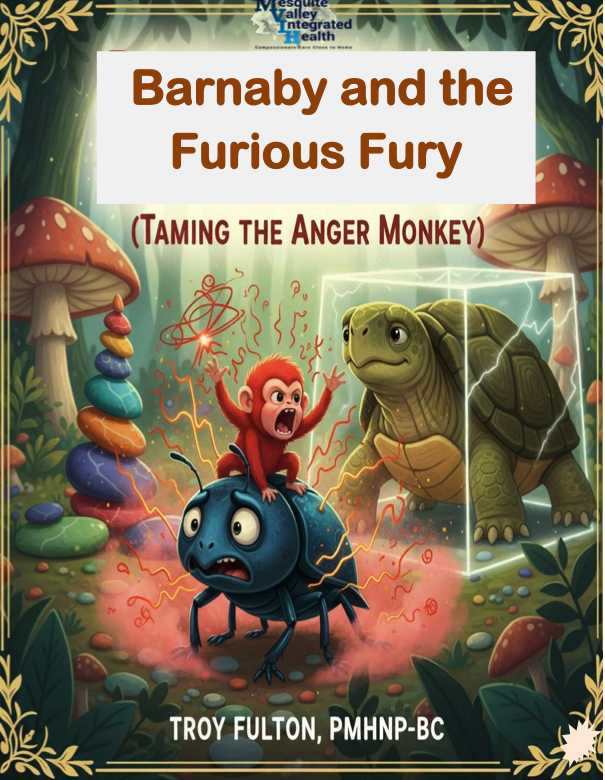
A Message to Our Readers Hello, friend! Have you ever felt so angry that you wanted to scream, throw things, or run away? That feeling is huge, fast, and sometimes very scary! In this book, we're going to meet a sweet beetle named Barnaby who discovers that his big, furious feeling is actually a noisy creature called Ragey the Anger Monkey! Ragey sits on Barnaby’s head, makes his face hot, and makes his hands get that "itchy" feeling that wants to push things over. The secret to this story is learning that you are not your monkey. Ragey is loud, but you are the boss! When you separate yourself from the anger, you can stop just reacting and start solving. With the help of the wise Professor Sheldon the Snapping Turtle, Barnaby learns the special trick to tame Ragey. He discovers that anger isn't bad—it's actually a signal telling him that something feels wrong, like a fire alarm going off! Get ready to fill your Calm Kit with cool tools like the three-step "Banana Breath" and the "Safe Swing." By the end of this book, you will learn how to put Ragey into a mental "Calm Cage" and even teach him a new job—turning his loud energy into helpful power. You’ll become the Tamer of your own furious fury, and that’s a superpower!

Barnaby and the Furious Fury
A story-based emotional learning book that helps children understand anger and build calming skills.
Preface

WHAT IS ANXIETY? Anxiety is like having a built-in alarm system. It warns us of danger, which is useful. But sometimes the alarm rings too loudly, even when nothing bad is happening. That’ s when it feels overwhelming. Quick Check: Can you think of a time your “ alarm ” went off, even if nothing bad happened? THE ANXIETY CYCLE Anxiety often follows a loop: 1.Something triggers a worry. 2.Your mind fills with “ what if” thoughts. 3.Your body reacts (fast heartbeat, sweaty hands, tummy aches). 4.You avoid the thing. 5.You feel a little better for now. 6.But the worry grows stronger for next time. Question for You: Can you spot a time when you went through this loop? WHY THIS MATTERS When we understand the cycle, we can learn to stop it. It’ s like finding the “ off” button for the alarm so it doesn ’t boss us around. Challenge: Point to where you think your “ off button ” might be, your head, your heart, your hands?

Anxiety Management Workbook for Kids
A child-centered workbook with tools and activities to help kids understand anxiety and feel more confident.
Preface

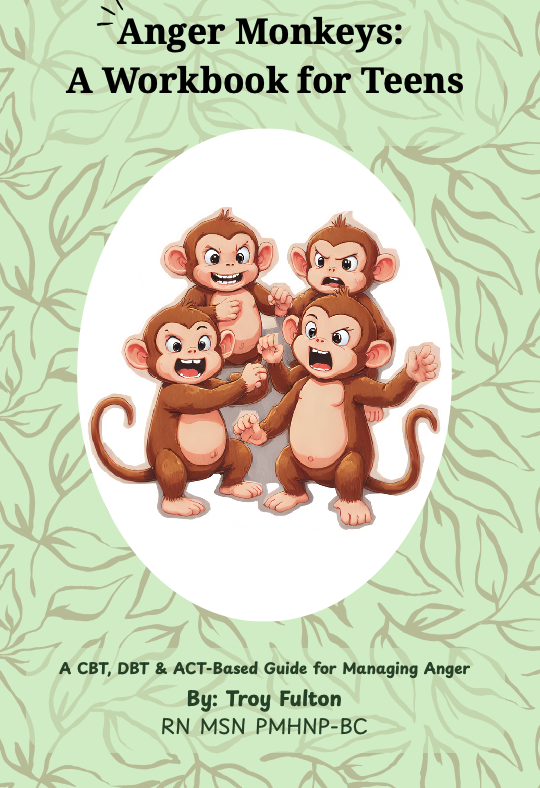
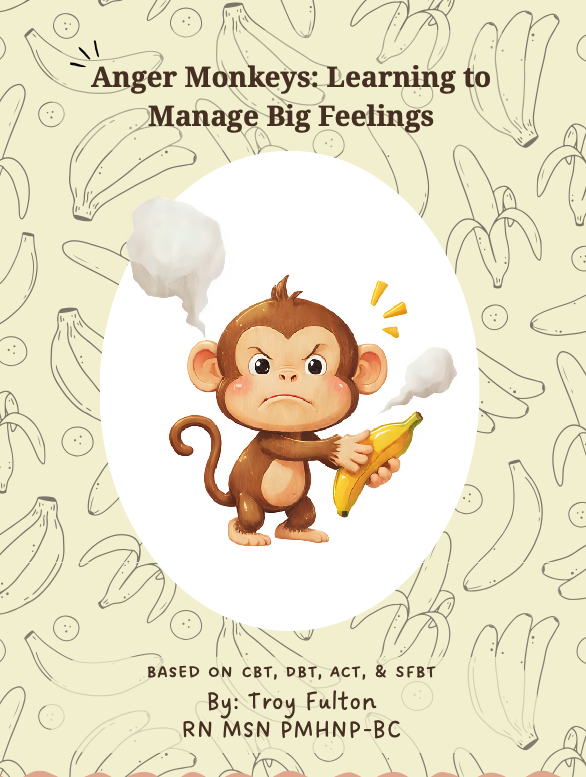
"Hey there!" Max swings down from a tree branch, grinning. "We ’ re the Anger Monkeys, and we know all about what it’ s like to feel fired up, frustrated, and ready to explode. " Luna joins in, brushing her fur from climbing. "We ’ ve all been there, anger is part of life. But if we don ’t learn to deal with it in a healthy way, it can mess up our friendships, our goals, and even how we feel about ourselves. " Charlie nods. "That’ s why we ’ ve learned a bunch of cool skills from three powerful approaches (CBT, DBT, and ACT) that help us deal with anger and make better choices. " Zoe smiles. "And now we ’ re sharing them with you. In this workbook, we ’ll tell you our stories and give you tools so you can handle your own anger with confidence.

Anger Monkeys: A Workbook for Teens
A workbook for teens with practical strategies for understanding anger, impulse, and emotional reactions.
Preface

Here’s how it works: Hi there, friend! I’m Max the Monkey, and sometimes... I get REALLY mad. Like when someone takes my toy, or when I can’t get my turn, or when I feel like nobody’s listening to me! This book is here to help you (and me!) understand what anger is, what it feels like, and what we can do about it so it doesn’t take over our day. Read the stories and pages. Try out the fun activities and drawings. Learn cool ways to calm down when anger starts bubbling up. Ready to be an Anger Superhero? Let’s go bananas (in a good way)!

Anger Monkeys: Learning to Manage Big Feelings
A kid-friendly emotional skills book designed to help children recognize and manage strong feelings.
Preface

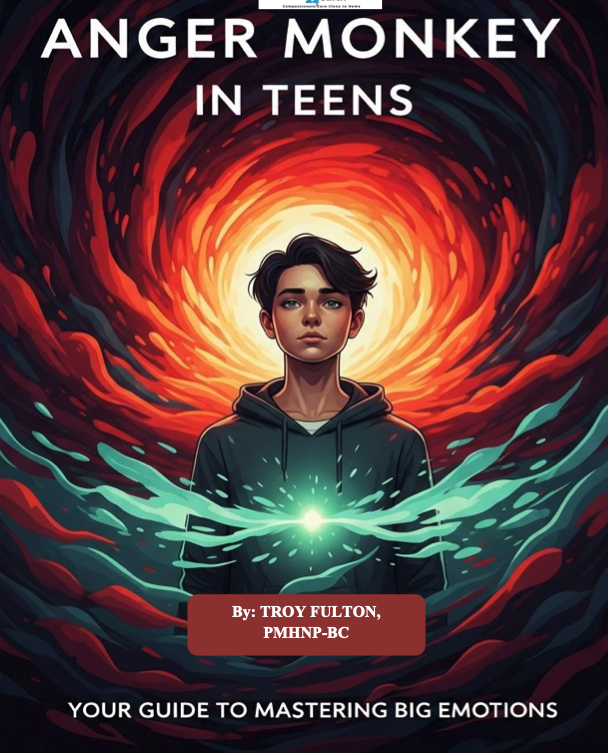
You might have picked up this book because you're feeling overwhelmed, frustrated, or just plain angry. Maybe your anger feels like a volcano ready to erupt, or maybe it's more like a low-level buzzing that just won't go away. Whatever your experience, know this: you're not alone, and you've come to the right place. This is not a book that's going to tell you not to be angry. Anger is a normal, powerful, and important emotion. It can be a signal that something is wrong or that you need to stand up for yourself. This book, "Anger Monkey in Teens," is a guide to understanding that emotion and learning how to work with it, not against it. Think of it as a toolbox for your mind, filled with practical skills and strategies to help you navigate those intense feelings, communicate more effectively, and build stronger relationships. This workbook is designed to be your personal space to explore, reflect, and learn. The "Anger Monkey" is a fun way to talk about the messy, sometimes confusing parts of our anger without judgment. Whether you're a teen looking for a way to feel more in control, a parent seeking to better understand your child, or a mental health professional looking for a new resource, this book offers a clear, compassionate, and science-based approach to a very real and important part of life.

Anger Monkey in Teens
A teen-focused guide that helps adolescents better understand big emotions and develop healthier coping skills.
Preface

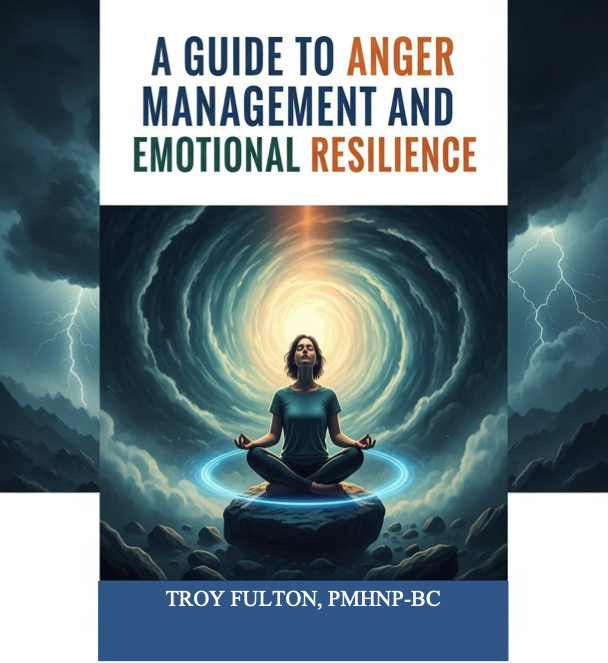
Welcome. If you are holding this book, you have already taken the most difficult and courageous first step on a journey of self-discovery and transformation. You are here because you recognize that anger, while a natural human emotion, has become a storm that you no longer wish to live in. You may feel that your anger is unpredictable, overwhelming, or that it has caused pain to you and those you care about. You may be tired of the cycle of reactivity, regret, and the feeling that you are not in control. This workbook is a safe, non-judgmental space designed to help you navigate this complex emotional landscape. It is a guide built on the principle that your anger is not a flaw in your character; it is a powerful signal that something needs attention. Rather than telling you to "stop being angry," this guide will empower you to understand your anger, identify its roots, and learn to respond to it with wisdom and intention. Throughout these pages, you will engage in a practical, step-by-step process to build your emotional intelligence and resilience. This is not a book to be simply read, but a workbook to be actively experienced. You will find journaling prompts that encourage deep self-reflection, and worksheets that translate abstract concepts into concrete, actionable steps. This process will help you to:  Unpack your anger and understand what it's really telling you.  Identify your unique triggers and the early warning signs of escalation.  Learn and practice immediate de-escalation techniques to manage a surge of anger in the moment.  Rewire your thoughts to challenge the patterns that fuel your anger.  Develop healthy communication skills and set boundaries that protect your peace.

A Guide to Anger Management and Emotional Resilience
A supportive guide for building emotional resilience while learning healthier ways to manage anger.

Preface

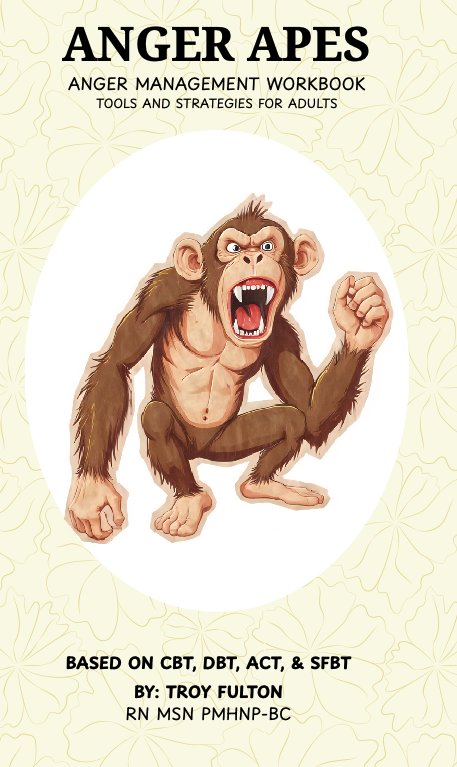
Welcome, and thank you for choosing "Anger Apes for Adults: Mastering Your Primal Emotions." If you're holding this book, chances are you've experienced the powerful, often overwhelming, force of anger in your adult life. Perhaps it's a simmering resentment that erodes your peace, an explosive rage that damages your relationships, or a quiet frustration that leaves you feeling drained and unfulfilled. You might be tired of feeling out of control, tired of the regret that follows an outburst, or simply curious to understand this complex emotion that impacts us all. Whatever your reason, know that you've embarked on a courageous and profoundly empowering journey. This isn't a book that will tell you to simply "stop being angry." Anger is not inherently good or bad; it is a primal, fundamental human emotion—a powerful signal that something in our world or within ourselves needs attention. Like a wild ape, it possesses immense strength and instinct, capable of great destruction but also incredible protection and motivation when channeled correctly. For adults, anger often carries the weight of past experiences, learned behaviors, societal pressures, and the complex stressors of daily life—from career demands and financial worries to intricate personal relationships and unresolved traumas. This workbook recognizes that your Anger Ape is unique, shaped by your personal history, and therefore, its taming requires a personalized, compassionate, and evidence-based approach. Within these pages, we will embark on a comprehensive exploration of adult anger. We'll start by understanding your specific "Anger Ape"—its triggers, its warning signs, and its deep-seated impacts on your physical health, mental well-being, and relationships. Then, we will equip you with a robust toolkit of practical, proven strategies derived from cognitive-behavioral therapy (CBT), dialectical behavior therapy (DBT), and mindfulness practices. You'll learn how to calm your nervous system in the heat of the moment, challenge the angry thoughts that fuel the fire, communicate assertively to get your needs met, and build a sustainable wellness plan to cultivate long-term emotional resilience. This is more than just a book; it's an interactive workbook designed to be your personal guide. Each chapter includes dedicated journaling prompts and worksheets, inviting you to reflect, practice, and integrate these powerful skills into your daily life. It asks for honesty, self-compassion, and a willingness to explore uncomfortable truths. The journey to mastering your primal emotions is not always easy, but it is deeply rewarding. By understanding, taming, and wisely channeling your Anger Ape, you will unlock a profound sense of peace, strengthen your connections, and reclaim control over your emotional landscape. Let's begin the work of transforming your anger into a source of strength, not struggle.

Anger Apes for Adults: Mastering Your Primal Emotions
An adult-focused guide to recognizing triggers, managing emotional intensity, and improving self-control.
Preface

WELCOME Anger is a natural human emotion. It can show up when our boundaries are crossed, when we feel disrespected, or when life throws one frustration after another our way. While anger itself isn ’t “bad, ” the way we respond to it can either protect our well-being or cause harm to ourselves and others. This workbook is designed to help you understand, manage, and transform your anger in healthier, more productive ways. Using proven strategies from Cognitive Behavioral Therapy (CBT), Dialectical Behavior Therapy (DBT), Acceptance and Commitment Therapy (ACT), and Solution-Focused Brief Therapy (SFBT), you ’ll learn both the why and the how of managing anger effectively. PURPOSE OF THIS WORKBOOK By the end of this workbook, you will: Recognize what triggers your anger and the thoughts that fuel it. Learn strategies to pause, reflect, and choose responses rather than reacting impulsively. Practice skills to regulate your emotions, improve communication, and reduce conflict. Shift from focusing on problems to focusing on solutions that align with your values. This is not about “ getting rid of ” anger. It’ s about mastering it so it no longer controls you.

Anger Apes: Anger Management Workbook
A practical workbook that teaches tools and strategies for understanding anger and responding in healthier ways.
Preface

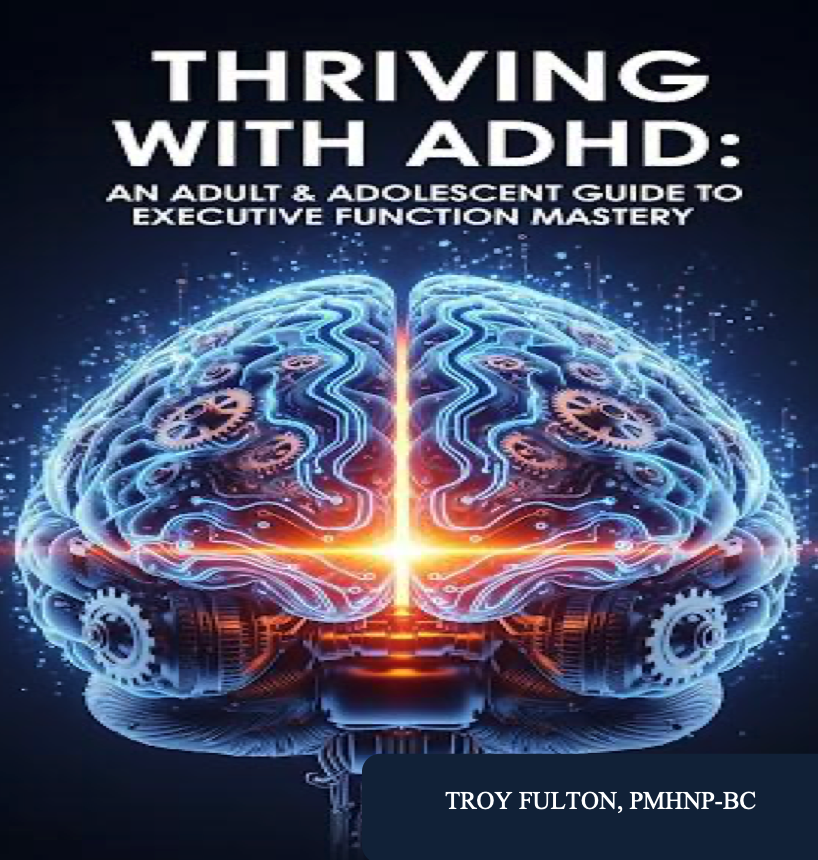
Welcome to a guide for the ADHD brain. If you've ever felt like you were living life on the "hard mode" setting—struggling with deadlines, losing your keys (again), or feeling overwhelmed by a messy apartment—you're not alone. The way your brain works is unique, and while it comes with incredible strengths, it also presents distinct challenges. This ebook is designed to help you navigate those challenges with a deeper understanding of yourself, moving beyond the idea of ADHD as a list of deficits and toward a new perspective of it as a different kind of operating system. This isn’t a book of quick fixes or generic advice. Instead, we'll dive into the advanced concepts of executive functions, the set of mental skills that helps you manage your life, and we'll connect them directly to your experiences as an adolescent or adult. We’ll explore your brain’s unique wiring, providing you with a toolkit of sophisticated, practical strategies. By the end of this guide, you will be equipped to master key skills, build systems that work for you, and, most importantly, learn to leverage the unique advantages of your ADHD brain to live a more organized, productive, and fulfilling life.

Thriving with ADHD: An Adult & Adolescent Guide to Executive Function Mastery
A strengths-based guide to managing ADHD with tools for focus, organization, and everyday success.
Preface

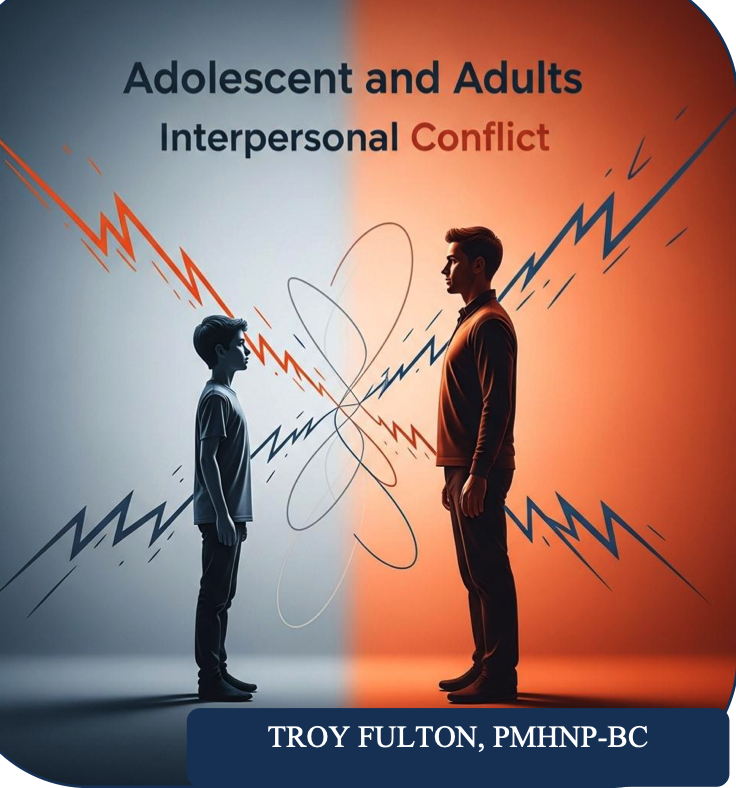
Conflict is an unavoidable and often difficult part of the human experience, particularly within the complex dynamics of family and personal relationships. While disagreements are a natural part of life, the way we navigate them can either tear us apart or bring us closer together. This is especially true for the relationships between adolescents and adults, where differences in perspective, communication styles, and life stages can create a unique and challenging landscape of interpersonal conflict. Navigating Interpersonal Conflict for Adolescents and Adults is a mental health related guide designed to be a therapeutic and educational resource, offering a clear path through these difficult moments. This ebook is not about eliminating conflict entirely, but rather about transforming it from a destructive force into an opportunity for growth and understanding. Our goal is to equip you with the practical tools and insights needed to understand the root causes of conflict, develop effective strategies for managing it, and work towards a resolution that is healthy for everyone involved.

Adolescent and Adults Interpersonal Conflict
A workbook focused on understanding conflict, improving communication, and building healthier relationship skills.
Preface

Welcome to your ADHD Super Skills Workbook! This isn ’t just any book, it’ s your personal guide to practicing brain powers like focus, memory, planning, and self- control. Think of it as a gym, but for your mind. Here ’ s what you ’ll find inside: Guides: simple explanations about how your brain works. Worksheets: fun activities, doodles, and games where you practice new skills. Tips for parents: little notes to help adults support you while you learn. You don ’t need to rush through. Some kids like doing a page a day, others enjoy doing a few at once. There ’ s no wrong way, just your way. So get ready! You ’ re about to train your brain like a superhero learning new powers.

ADHD-Executive Functioning Skills for Kids
A structured workbook that teaches children how to improve routines, emotional control, and task completion.
Preface

Welcome to your ADHD and executive functioning workbook. This resource is designed for adults who want to understand how ADHD affects their daily lives and practice strategies to strengthen focus, organization, and follow-through. HOW TO USE THIS WORKBOOK Take your time. Some pages will be quick, others may invite deeper thought. Be honest. Your answers are for you, not for anyone else ’ s judgment. Write things down. Putting your ideas on paper helps turn them into real action. Revisit when needed. These skills improve with repetition, just like building a muscle. The workbook includes two types of pages: Guides: Clear explanations of ADHD and the skills connected to executive functioning. Worksheets: Practical exercises to reflect on your habits, apply strategies, and track progress. By the end, you ’ll have a clearer sense of where ADHD shows up for you, what your strengths are, and a personalized toolkit of strategies to make daily life smoother and more manageable.

ADHD-Executive Functioning Skills for Adults
A practical resource for adults who want to strengthen focus, organization, and follow-through in daily life.
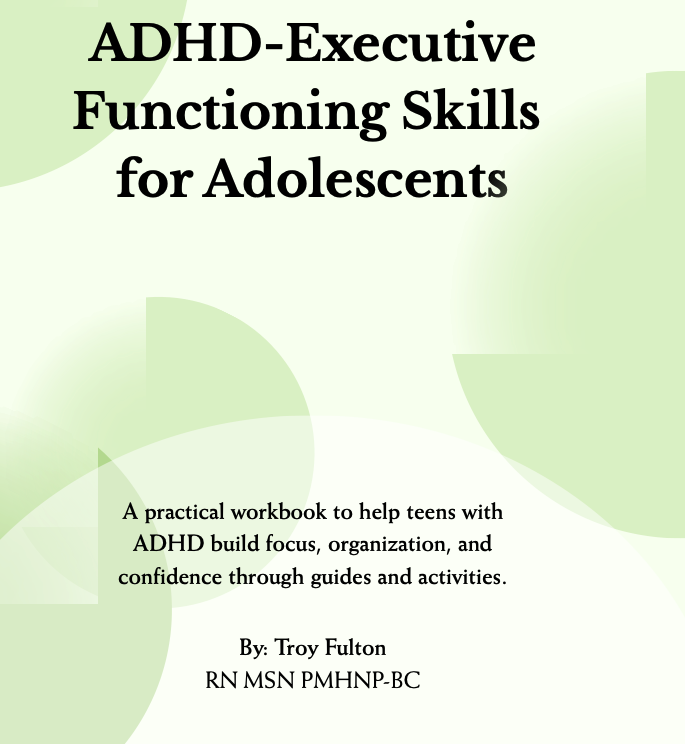
Preface

WHY THIS WORKBOOK EXISTS Living with ADHD can sometimes feel like trying to run a race with surprise hurdles along the track. It doesn ’t mean you can ’t finish the race, it just means you need strategies and practice to clear the hurdles. This workbook is here to: Help you understand your brain and how it works. Teach you skills to handle daily challenges. Give you space to reflect and create your own toolkit for success. WHAT YOU’LL FIND INSIDE You ’ll see guides that explain important ideas and worksheets where you ’ll get to practice or reflect. By the end, you ’ll have a set of tools that are personal to you, something you can use at school, at home, and with friends.

ADHD-Executive Functioning Skills for Adolescents
A guided workbook for teens focused on improving planning, attention, and everyday executive functioning skills.
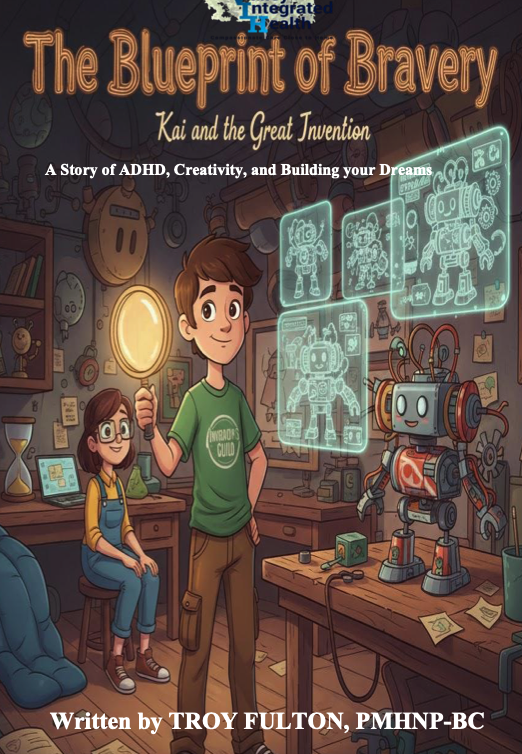
Preface

The journey of an ADHD brain is often a brilliant but chaotic one, filled with "Golden Ideas" that sometimes feel impossible to bring to life. The Blueprint of Bravery: Kai and the Great Invention follows Kai as he moves from the soccer field to the inventor’s workshop, facing his biggest challenge yet: the Junior Inventors' Fair. While his imagination is limitless, he quickly encounters the "Wall of Awful"—the daunting emotional barrier that makes starting a project feel like climbing a mountain. Alongside his steadfast friend Lena, Kai navigates the "Boring Middle," learns to manage the crash of a dopamine-seeking mind, and discovers that perfection is less important than the courage to keep going. The primary purpose of this book is to serve as a practical and emotional roadmap for mastering Executive Function. While our previous story focused on managing sensory storms, this book dives into the "how-to" of task initiation, persistence, and organization. By introducing concepts like "Body Doubling" and "Micro-Steps," the narrative transforms complex psychological strategies into relatable, everyday tools. It aims to shift the reader’s perspective from seeing their brain as "messy" to seeing it as a dynamic laboratory where mistakes are simply data points on the path to a finished creation. For children with ADHD, this book is a vital mirror and a source of validation. Many kids growing up with neurodivergence internalize "Task Paralysis" as laziness or a lack of talent, which can lead to a cycle of shame and unfinished dreams. They need this book to understand that their struggle with starting and sticking to a project is a biological hurdle, not a character flaw. By seeing Kai navigate Rejection Sensitivity and hyperfocus exhaustion, young readers learn to be "teammates" to themselves. This book empowers them to embrace their unique way of thinking, teaching them that they truly are the architects of their own bravery.

The Blueprint of Bravery: Kai and the Great Invention
A story-driven confidence book that encourages creativity, courage, and belief in personal strengths.
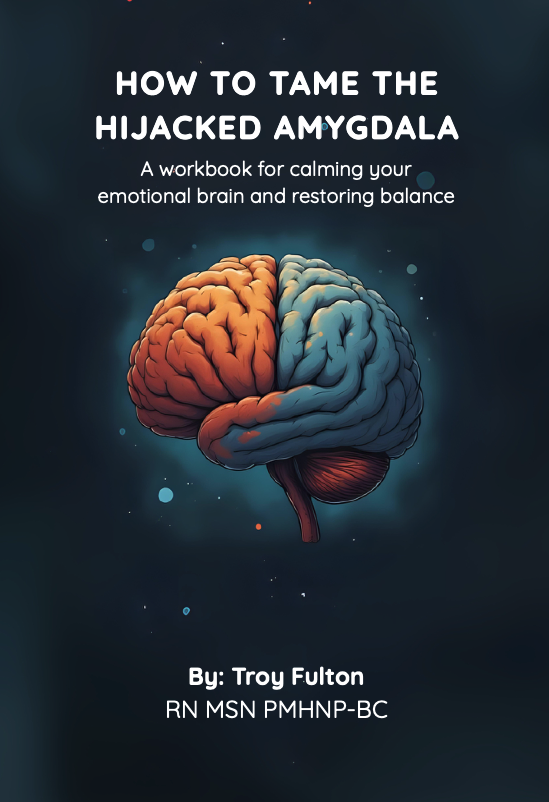
Preface

WELCOME This workbook will help you understand why emotions sometimes take over and what you can do to regain control. It blends education, reflection, and practical tools to support emotional balance. WHY THIS MATTERS Strong emotional reactions aren ’t weakness, they are the result of your brain ’ s survival system, led by the amygdala. By learning about this process, you can approach emotions with awareness and self-compassion. WHAT YOU’LL LEARN Across these pages you will explore: How the amygdala works. What happens during a hijack. How to recognize your patterns. Self-soothing and grounding strategies. Practical DBT skills for daily life. HOW TO USE THIS WORKBOOK Take your time. Reflect honestly. Practice the exercises often. The more you engage with these tools, the better prepared you ’ll be when emotions run high.

How to Tame the Hijacked Amygdala
A practical guide to calming emotional overwhelm and responding more thoughtfully during stress.
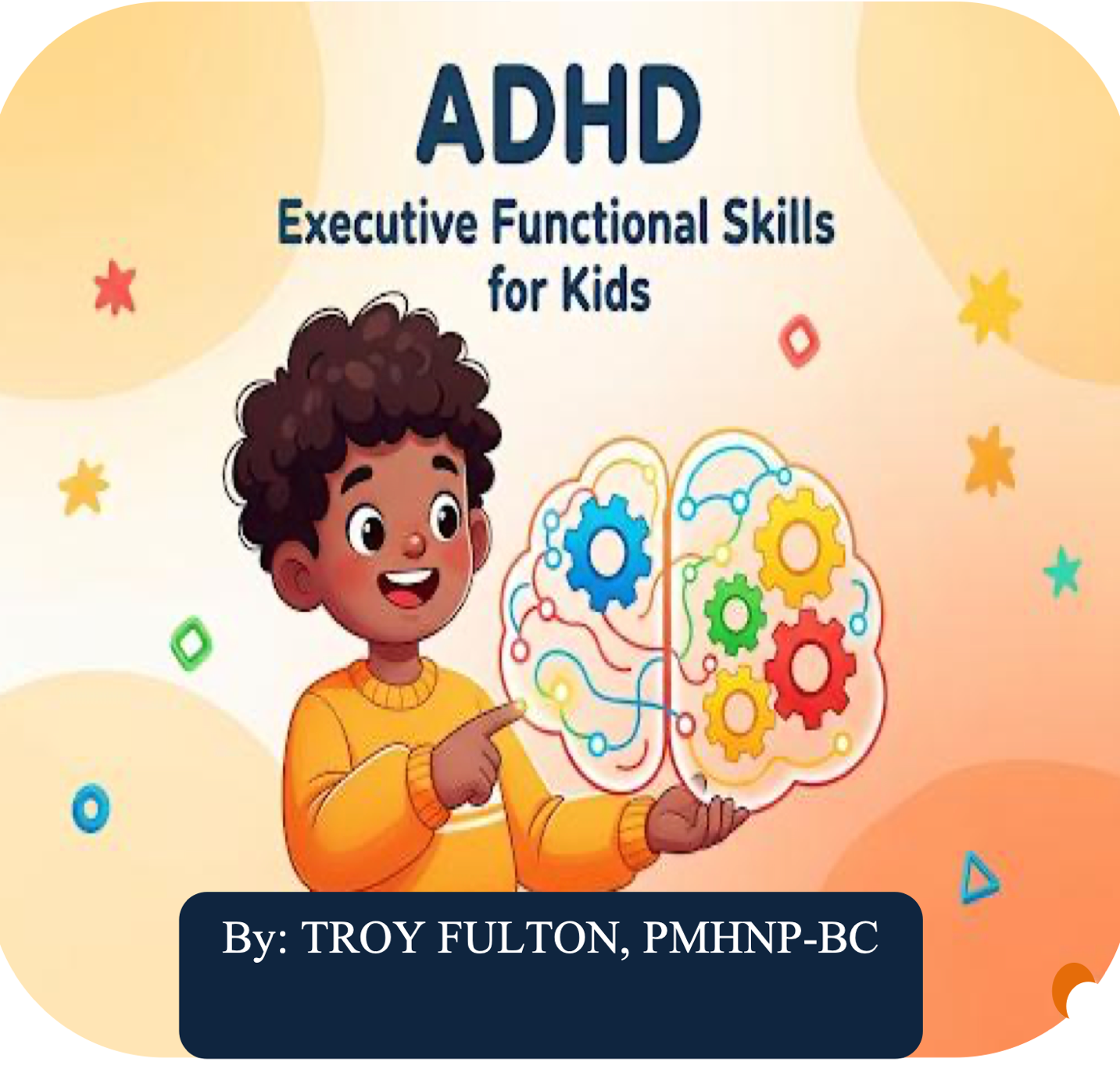
Preface

Welcome, young adventurer, to "The ADHD Superpower Guide: Mastering Your Brain's Executive Functions"! You might have heard about ADHD, and sometimes grown-ups or even other kids might talk about it like it's a problem. But here's the cool secret: having ADHD just means your brain is wired in a unique and often amazing way! It's like having a super-fast sports car brain that sometimes needs a little help with its steering and brakes. This book isn't about fixing something that's broken; it's about understanding how your incredibly creative and energetic brain works and giving you the special tools—what we call "executive functions"—to help you shine even brighter. Inside these chapters, you're going to learn about the amazing skills your brain uses every single day, like planning fun activities, remembering what to do, staying organized, and even managing those big, bubbly feelings. We'll explore these executive functions together, not as chores, but as exciting superpowers you can learn to control and strengthen. Get ready to discover how your unique ADHD brain can be a powerful asset when you learn to harness its energy and brilliance. This is your guide to unlocking your full potential and becoming the master of your own incredible mind!

ADHD Executive Functional Skills for Kids
A child-friendly workbook that helps kids build focus, organization, and self-control through simple, practical exercises.
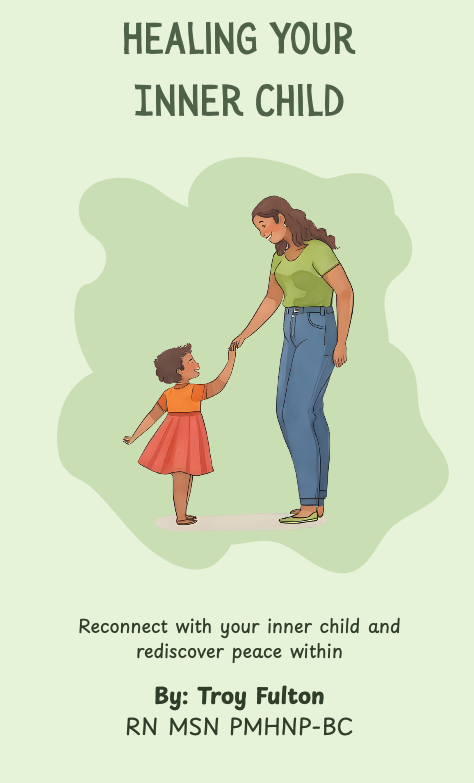
Preface

The journey toward psychological wholeness is often a process of looking backward to move forward. Healing the Inner Child serves as a rigorous, evidence-based exploration into the hidden architecture of the human psyche, bridging the gap between abstract emotional wounding and the concrete realities of clinical neuroscience. This book meticulously traces the origins of our adult behaviors to the formative years of childhood, utilizing frameworks such as Attachment Theory, Polyvagal Theory, and Memory Reconsolidation to explain how early experiences are physically and emotionally encoded. By synthesizing contemporary research on Complex PTSD, chronic shame, and neuroplasticity, this text offers a comprehensive roadmap for identifying the "invisible trauma" of neglect and the loud echoes of developmental adversity. It moves beyond traditional talk therapy to integrate bottom-up, somatic approaches and internal parts-based psychology, providing a multidimensional view of what it truly means to repair a fractured sense of self.

Healing Your Inner Child
A gentle healing guide focused on emotional recovery, self-compassion, and reconnecting with younger parts of yourself.
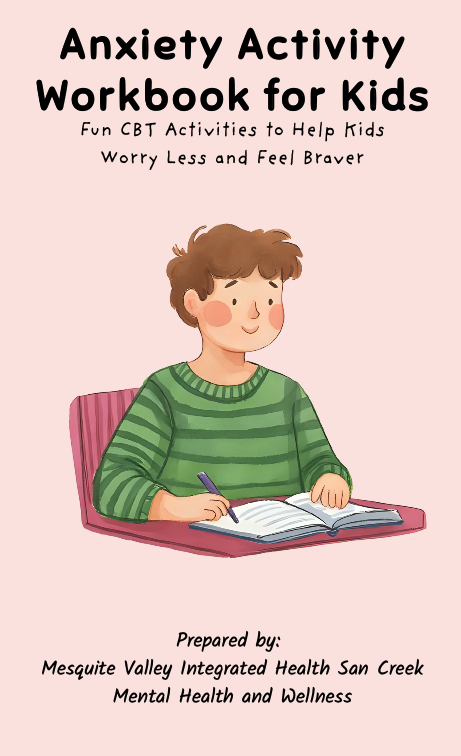
Preface

A workbook to help children with anxiety

Anxiety Activity Workbook for Kids
An engaging activity-based workbook that helps children manage worry and build emotional confidence.
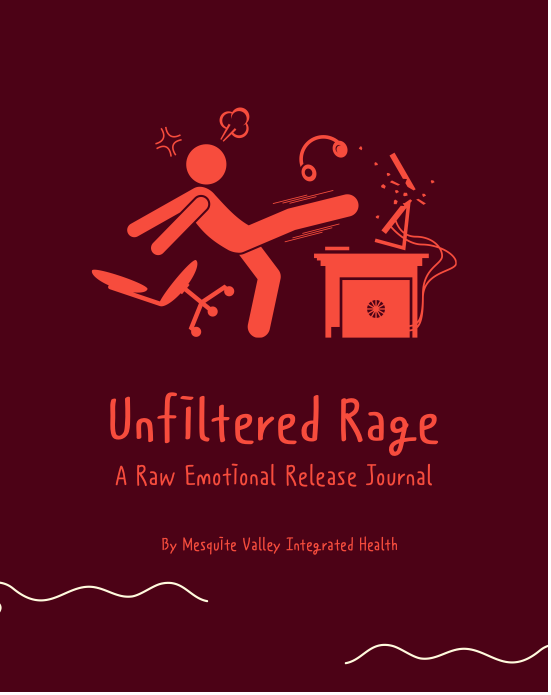
Preface

Welcome to Unfiltered Rage — a safe, raw, and judgment-free space to let it all out. This workbook isn’t about holding back, being polite, or sugarcoating your emotions. It’s about honesty. It’s about release. It’s about giving your anger a voice before it turns inward or explodes outward. Here, you can curse, cry, scribble, scream on the page— whatever it takes to get to the truth beneath the rage. There are no rules, no right or wrong way to feel. Just you, your fire, and the freedom to finally feel it. Let’s burn through the bullshit. Let’s get real. Let’s rage.

Unfiltered Rage: An Adult Emotional Release Journal
A guided journal for adults to process anger, frustration, and intense emotions in a healthier way.
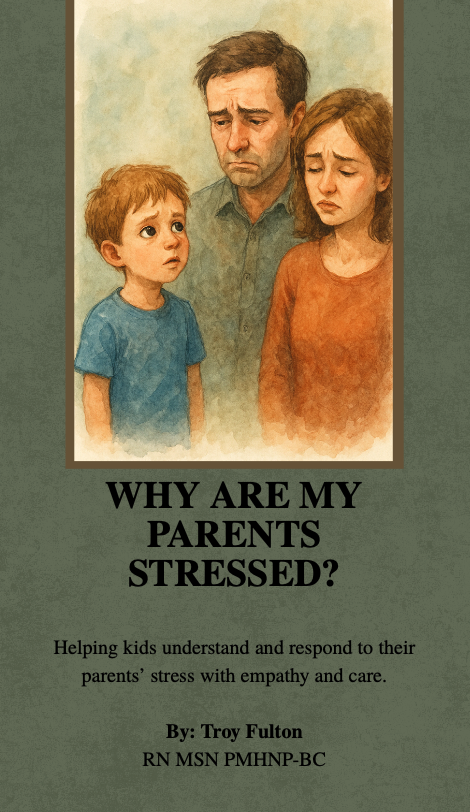
Preface

WHAT THIS WORKBOOK IS ABOUT This workbook helps you understand your parents when they are stressed. It will not ask you to take on their problems, but it will guide you to notice their feelings, show empathy, and communicate calmly. At the same time, it reminds you that you are still their child, it is always okay to ask for love and support. WHY EMPATHY MATTERS A POSITIVE MINDSET As you begin, keep these points in mind: Stress is not your fault. You do not need to fix your parents ’ problems. You can respond with patience and kindness. You can understand your parents while still relying on them for support.

Why Are My Parents Stressed?
A child-friendly book that helps kids better understand family stress and emotional reactions at home.

Preface

To the Kid with the Turbo Engine Have you ever felt like you have the fastest, most powerful brain in the world? You have tons of amazing ideas, incredible energy, and you're always ready to go! That's because your brain is a Turbo-Charged Race Car—a brilliant, high-performance machine called The Zoomer. But sometimes, having all that speed can feel like chaos. Maybe your ideas spin out too fast, or it's hard to stay on the track when the race gets organized (like homework or chores). If you’ve ever felt like you’re in a demolition derby instead of the Grand Prix, this book is for you! This isn't just a story; it's a Training Manual that will teach you how to handle your incredible power and finally win the race for focus and control. You don't have a broken brain; you just have an engine that runs differently! Inside these pages, you will meet Ace, a driver just like you, and his mentor, Patty Pitstop. Together, you will learn how to build the crucial tools you’re missing: the Control Panel. You’ll discover how to install the Speedometer Check for handling big emotions, the Pit Stop Protocol for smart energy breaks, and the Headlight Tool for razor-sharp focus. These are the tools of Executive Function, translated into high-octane racing language. By the end, you won't just be the fastest car; you'll be the most controlled and consistent one on the track. Your powerful brain is your superpower, and this ebook will show you how to harness it. Stop seeing your speed as a problem and start seeing it as an advantage. Get ready to buckle up, learn the rules of the track, and turn your high energy into winning performance. By mastering The Zoomer, you will find success not just in races, but in school, with friends, and at home. It's time to stop crashing and start cruising. Let's get racing!

Turbo-Charge Your Brain: The Race Car Guide to Focus
A fun, fast-paced guide that helps young readers improve focus, energy regulation, and attention skills.
Preface

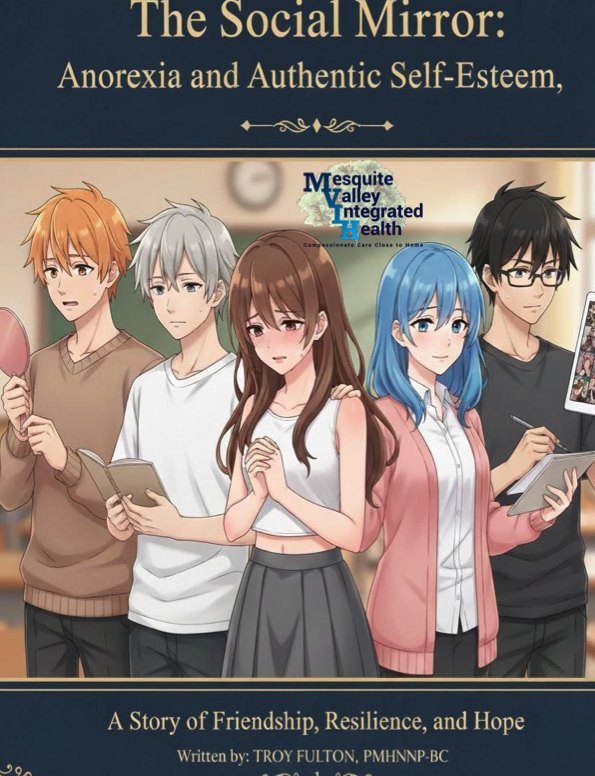
In an age saturated with curated images and the relentless pursuit of an often-unrealistic "perfect" self, the journey to authentic self-esteem can feel like navigating a complex maze. This eBook, "The Social Mirror: Anorexia and Authentic Self-Esteem," delves into this challenging landscape through the eyes of a group of relatable adolescent friends. The story centers on Sakura, whose struggles with self-image tragically escalate into Anorexia Nervosa. As her friends—Emi, Ren, Haru, and Kenji— observe her quiet withdrawal and alarming changes, they embark on a collective journey of understanding, empathy, and support. This narrative explores the insidious ways social pressures, fueled by digital media, can distort one's self-perception and lead to a dangerous search for control. It is a story not just about an individual's battle, but about the profound impact of friendship, education, and the courage to confront a serious mental health challenge. The primary purpose of "The Social Mirror" is to illuminate the complexities of Anorexia Nervosa as a critical social issue, moving beyond simplistic notions of vanity to reveal its deep psychological roots as a coping mechanism for anxiety and a misplaced search for control. Through the friends' experiences, the book aims to equip 13-19 year old adolescents with vital knowledge: how to identify the warning signs of AN in themselves and others, understand the detrimental effects of external validation on self-esteem, and learn practical coping skills. It meticulously guides readers on how to be an effective ally to someone struggling with an eating disorder, emphasizing the importance of non-judgmental support, appropriate communication, and the crucial step of seeking professional help. The narrative also provides empowering strategies for those directly affected, fostering self-compassion and resilience through the challenging path of recovery. Adolescence is a formative period where self-identity is forged, often under intense pressure from peers and pervasive digital influences. Reading "The Social Mirror" is crucial for young adults as it offers a vital resource in navigating these pressures, fostering mental health awareness and promoting a culture of empathy. By presenting this sensitive topic in a relatable story format, it destigmatizes mental illness and encourages open conversations about body image, self-worth, and emotional well-being. This book empowers adolescents to critically evaluate societal beauty standards, build intrinsic self-esteem, and understand the profound value of genuine connections. Ultimately, it serves as a beacon of hope, reminding readers that while the journey to self-acceptance may be challenging, it is one that need not be walked alone, and that true strength lies in authenticity and mutual support.

The Social Mirror
A reflective book centered on self-esteem, body image, and authenticity in recovery.

Preface

Welcome to the start line. Right now, your brain probably feels like a powerful, untamed race car stuck in a demolition derby—high speed, high adrenaline, but too many "crashes" (impulsive mistakes, forgotten deadlines, emotional outbursts) and zero control. You know you have a V12 engine—a brilliant, fast, ADHD mind—but you’re tired of the chaos. This book is your all-in-one Owner's Manual and Pit Crew Training Guide. Over the next seven chapters, you’ll meet Jax, a veteran driver who mastered their own high-performance brain, and Nova, our strategy expert who holds the blueprints for total control. Together, we’ll take the raw energy of your ADHD and teach you how to install a steering wheel, a braking system, and a detailed GPS so you can move your machine from the "Crash Derby" of chaos onto the clean, organized track of high-performance racing. The purpose of The High-Performance Brain is simple: to shift your perspective of ADHD from a life sentence of struggle to a superpower that requires expert handling. This isn't just about managing symptoms; it’s about mastering your machine. We will give you sophisticated, real-world strategies for adolescents—not elementary tricks. You will learn the science behind your engine (understanding dopamine and executive function), how to plot your course (setting challenging but achievable goals), and the crucial skill of executing a successful Pit Stop (fueling, rest, and strategic breaks). We believe your ADHD brain isn't broken; it's simply built for speed, and we're here to teach you how to handle the wheel like a champion driver. You should read this book because you are ready to be the expert driver of your own life. If you’re tired of feeling misunderstood, constantly playing catch-up, or letting your fantastic ideas stall out, this is your wake-up call. We don't promise to make the track easy, but we guarantee to make you ready for it. By the time you finish, you will know how to communicate your needs like a strategist (Team Radio), manage your impulsivity like a pro applying the brakes (Steering Wheel Control), and use your natural hyperfocus as a competitive edge (Turbo Boost). Stop viewing your high-speed brain as a problem; start treating it like the incredible performance vehicle it is, and finally drive toward the Victory Lap you deserve.

The High-Performance Brain: Mastering the ADHD Race Track
A high-energy guide that reframes ADHD through performance, focus, and channeling strengths effectively.
Preface

WHAT BURNOUT IS Burnout isn ’t just being “ really tired. ” It’ s a state of mental, emotional, and physical exhaustion that builds up when stress hangs around too long. A weekend off or an early bedtime won ’t fix it, because burnout doesn ’t come from one bad day. It’ s the result of carrying too much for too long. HOW BURNOUT FEELS Constant fatigue: You ’ re drained no matter how much you rest. Irritability: Little things set you off. Brain fog: Focus and memory slip. Physical issues: Headaches, tension, stomach troubles. Disconnection: Tasks feel meaningless; joy feels distant. BURNOUT VS. STRESS VS. DEPRESSION Stress = too much (too many demands, too much pressure). Burnout = not enough (energy, motivation, spark). Depression = deeper sadness and hopelessness, spreading beyond responsibilities. Burnout isn ’t a weakness, it’ s a signal. Your body and mind are waving red flags, urging you to slow down and reset.

The Burnout Recovery Guide
A wellness guide designed to help readers recover from burnout and rebuild balance, energy, and resilience.
Preface

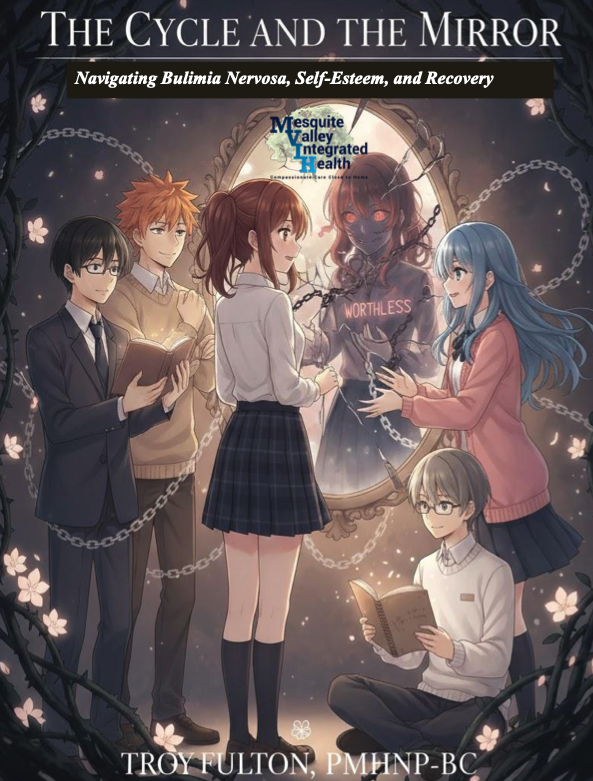
This ebook, "The Cycle and the Mirror: Navigating Bulimia Nervosa, Self-Esteem, and Recovery," continues the story of five close friends—Sakura, Emi, Ren, Haru, and Kenji—as they confront the complexities of Bulimia Nervosa (BN) and its profound effect on identity and self-worth. The story follows Sakura, the protagonist, whose journey through recovery from a previous eating disorder becomes complicated by the insidious onset of BN. Outwardly, she maintains a façade of control and success, yet internally, she is trapped in a secretive, painful cycle of bingeing and compensatory behaviors. The narrative charts the hidden psychological turmoil that fuels this condition, emphasizing how the illness is intensely tied to perfectionism, conditional self-esteem, and the relentless voice of the inner critic. Through the eyes of her friends—the analytical Ren, the empathetic Emi, the creative Haru, and the action-oriented Kenji—the story explores the difficult path of discovery, the pain of secrecy, and the collective effort required to support a loved one through a medical crisis. It comprehensively details the specific challenges of BN, the necessary coping skills, and the long road to true, sustainable self-acceptance. The primary purpose of this book is to serve as an advanced, educational, and compassionate guide for adolescents (ages 13–19) regarding Bulimia Nervosa. The content moves beyond simple definitions to deeply explore the complex BN-Self-Esteem Cycle—explaining how the psychological drivers (perfectionism, shame, need for control) perpetuate the behavior. It integrates real-life story scenarios with detailed educational focuses, providing practical, evidence-based coping skills for those struggling (such as Distress Tolerance/T.I.P.P. skills and mindfulness) and concrete guidance for allies (friends, siblings) on how to communicate concern, set boundaries, and seek professional help responsibly. This book aims to normalize the non-linear nature of recovery and emphasize that setbacks are not failures, but learning opportunities for radical self-compassion. Adolescents need to read this book because Bulimia Nervosa, often shrouded in secrecy and shame, is a prevalent and dangerous condition in this age group, severely impacting their self-esteem and future mental health. The story offers a vital roadmap for victims to recognize the symptoms in themselves, understand the root psychological issues, and learn actionable skills to challenge the cycle and rebuild their sense of worth based on internal values rather than external achievement or appearance. For allies, it provides the specific language and ethical framework needed to offer sustainable support without burnout or inadvertently causing harm. Ultimately, by merging an engaging story with advanced psychological and relational concepts, this ebook fosters digital empathy and real-life kindness, equipping young readers to be advocates for mental wellness and resilient in their own identity journey.

The Cycle and the Mirror
A reflective guide focused on eating disorder recovery, self-image, and rebuilding self-worth.
Preface

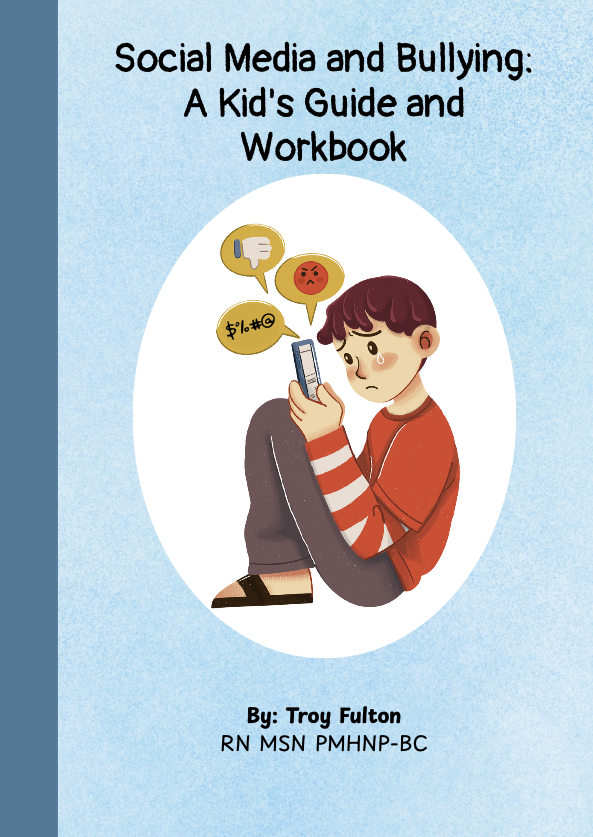
Social media is like a giant playground on the internet. Instead of swings and slides, there are apps and websites where people can talk, share pictures, post videos, play games, and even create their own content. It’ s a place to connect with friends and family, meet new people, and discover exciting ideas. Some popular social media apps you might already know are Instagram, TikTok, WhatsApp, Snapchat, YouTube, and Facebook. They can be really fun, but just like a real playground, there are rules to keep you safe. What is Social Media? Remember: what you post online is a bit like writing in wet cement, it can leave a mark even if you try to erase it later. QUICK SAFETY TIPS: Treat your account like your bedroom, only let in people you trust. Ask: “Would I be okay if my teacher or grandma saw this?” If someone makes you uncomfortable, block them and tell an adult.

Social Media and Bullying: A Kid’s Guide and Workbook
A workbook that helps children understand bullying, online behavior, and safe digital habits.
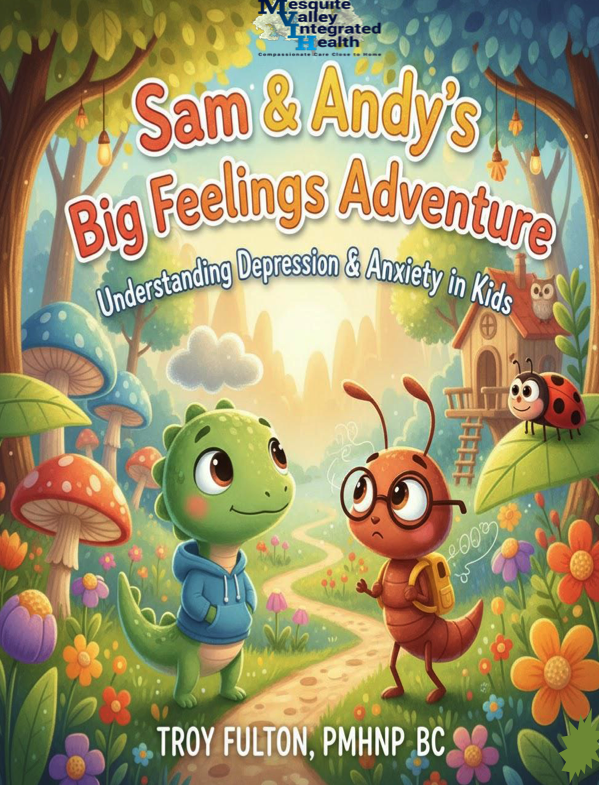
Preface

Giving Language to Big Feelings We know that talking to a child about feelings like depression and anxiety can feel overwhelming, even for the most prepared parent or caregiver. How do you explain a heavy, persistent sadness or a heart-racing worry when the child themselves doesn't have the words? This book was written because every child deserves a gentle, kind, and understandable way to talk about the emotions that sometimes feel too big to manage. Our mission is simple: to normalize these experiences, validate the child's inner world, and empower them with the knowledge that they are never alone in their feelings. Inside these pages, you and your child will meet two special friends who bravely share their stories: Sad Sam the Salamander and Anxious Andy the Ant. Sam’s experience is like having a heavy cloud that makes his favorite things seem dull, helping to illustrate what childhood depression—feeling low energy, disinterested, or irritable—truly looks like. Andy’s world is full of "what-if" worries and jittery wiggles in his tummy, explaining the physical and mental toll of anxiety. By following their adventures and seeing their struggles through a simple, relatable lens, children can finally put a name to their own confusing feelings and realize that their internal experience is both real and valid. This book is meant to be a starting point, not a clinical guide. It is a loving invitation to dialogue. As you read together, remember to lead with empathy and curiosity. Allow your child to pause, ask questions, or even just sit quietly with Sam or Andy’s story. This book offers tools—from deep breaths to talking to a trusted adult—and most importantly, it offers connection. This book is a secret map to help you understand your big feelings like Sam's depression and Andy's worries, and learn clever ways to feel stronger and calmer when those feelings show up.

Sam & Andy’s Big Feelings Adventure
A storybook that helps children explore emotions, communication, and healthy ways to express themselves.
Mesquite Valley Integrated Health

Phone (appointments): (480) 509-7738

Office Fax: 480-856-9069

Address: 560 W Brown Rd Suite 1011, Mesa, AZ 85201